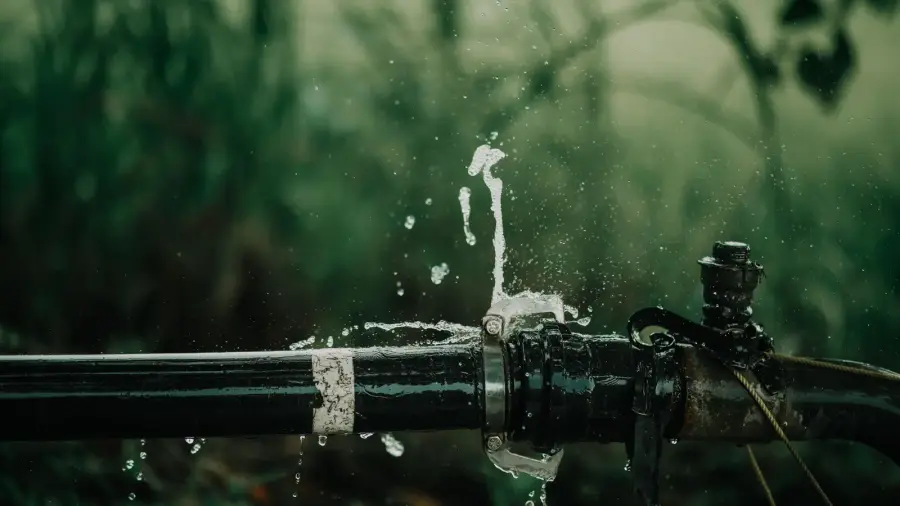
What burst pipe repair costs in Visalia
The pipe itself is cheap. What you pay for is getting to it. The same half-inch copper split costs a few hundred dollars in a garage and a few thousand under a slab, and no Visalia plumbing company publishes any of these numbers — the ranges below come from dated national guides cross-checked against a California-published slab leak guide, each row labelled with how local its sourcing is.
| Job | Typical range | Sourcing |
|---|---|---|
| Burst or leaking pipe — accessible (exposed, under sink, garage) | $150–$500 | National |
| Burst pipe — inside a wall or ceiling | $350–$1,500 | National |
| Leak under the concrete slab (repair or reroute) | $1,500–$4,400 | CaliforniaNational |
| Replace a run of damaged pipe | $150–$250/linear ft | National |
| Electronic / acoustic leak detection | $150–$400 | CaliforniaNational |
How these ranges were built (verified 2026-09-13): Ranges are compiled from dated national cost guides (HomeGuide, Angi), cross-checked against California-specific plumber-published guides where one exists, and against the only Central Valley plumber we found publishing a hard price. No Visalia plumbing company publishes prices, so every row is labelled with how local its sourcing actually is. Figures are what a homeowner typically pays; your quote depends on access, pipe condition, and timing.
Sources for this table
- HomeGuide — National, 2025-10-29
- Angi — National, 2026-07-15
- Alpine Plumbing (San Dimas, CA) — 2026 slab leak / leak detection guide — California, 2026-06-19
- Angi — National, 2026-07-20
Two lines on the table deserve a note. Leak detection ($150–$400) is the electronic or acoustic locating a plumber does when you know there is a leak but not where — a warm spot on the floor, a meter that spins with everything off, a water bill that doubled. It is usually credited toward the repair. Under the slab is the expensive row because the choice is between tunneling to the leak or abandoning that section and rerouting the line overhead through the attic and walls; a reroute is often the cheaper and more permanent answer, and a plumber who only quotes tunneling should be asked about it. Slab leaks are a big enough topic that they are not covered in depth here — this page is about supply pipes you can reach.
If the burst happens at night, add the after-hours premium ($100–$250) and the visit math from the emergency page. Drywall, texture, and paint after an in-wall repair are a separate trade and a separate bill, and cabinets or flooring that took water are the insurance claim, not the plumber.
Where pipes burst in Visalia homes
| Location | What usually fails | Typical repair |
|---|---|---|
| Hose bibs and exterior lines | Freeze splits on uninsulated exposed pipe; hose left connected through a freeze | $150–$500 |
| Irrigation backflow assembly | Brass body cracks in a hard freeze if not insulated or drained | Repair or replace the assembly; separate from house plumbing |
| Garage and water heater lines | Corroded galvanized, failed flex connectors, T&P discharge line | $150–$500 |
| Under kitchen and bathroom sinks | Angle stops, supply lines, compression fittings | $150–$500 |
| Inside walls | Pinhole leaks in copper, failed solder joints, nail strikes from a remodel | $350–$1,500 plus drywall |
| Attic | Uninsulated copper on the coldest nights; PEX chewed by rodents | $350–$1,500 |
| Under the slab | Copper pinholes from soil contact and water chemistry; abrasion at slab penetrations | $1,500–$4,400 (reroute or tunnel) |
| Water service line (meter to house) | Old galvanized or polybutylene; root or settling damage | $400–$1,700 repair · $2,000–$5,000 replace |
Why pipes fail here
Cold snaps, not cold winters. Visalia winters are mild but not frost-free: December and January average lows sit in the high 30s °F, the all-time record low is 13 °F (January 5, 1913), and the National Weather Service office in Hanford issues freeze warnings for the San Joaquin Valley when hard freezes are forecast. That is not Minnesota, but it is enough: the pipes that split in Visalia are the exposed ones — hose bibs with a hose still attached, uninsulated lines along a north-facing wall, irrigation backflow preventers standing in the open, and copper runs through an unheated attic or garage. Interior lines inside heated walls essentially never freeze here. On a freeze-warning night, disconnect hoses, open the hose bib slightly so it can't hold pressure, and let a faucet on an exterior wall drip.
Summer heat and pressure. Long stretches of triple-digit days expand attic pipe and run water heaters and expansion tanks harder. A failed or missing expansion tank on a closed system lets pressure spike every time the water heater cycles, and that pressure looks for the weakest joint. If a plumber replacing a water heater adds an expansion tank, that is code and it is why.
Age and material. Galvanized steel supply pipe (common in pre-1970s Visalia homes) rusts from the inside until it either clogs or splits. Copper from the 1970s–2000s develops pinholes, especially in slabs. Polybutylene (grey plastic, roughly 1978–1995) is a known-failure material. PEX (the current standard) is durable but is chewed by rodents in attics and degrades in sunlight. Knowing what your house has tells you whether one leak is a repair or a warning.
Water chemistry. Cal Water's 2024 Visalia System water quality report shows an average hardness of 73 ppm (about 4 grains per gallon) across 58 local wells, with individual wells ranging from 20 to 160 ppm — soft to moderately hard, not the very hard water some local marketing describes. source Moderate hardness is not what eats copper — aggressive or low-pH water is — and Visalia's published numbers do not point to an unusually corrosive supply. Treat any "your water is destroying your pipes" pitch with the report in hand.
The water service line: the leak in your yard
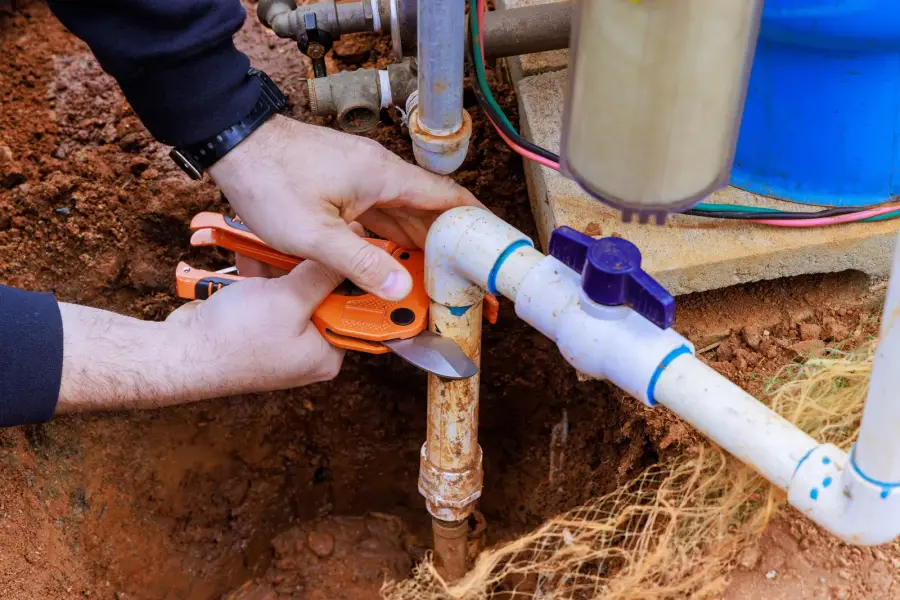
The service line runs from the Cal Water meter at the sidewalk to the house. It is underground, it is yours, and it is the leak most people find by the water bill, a permanently soggy strip of lawn, or the sound of running water when nothing is on. The test: turn off every fixture, then look at the meter — if the small leak indicator or the dial is moving, water is leaving the system somewhere on your side.
Cal Water tells customers to call the local district office for water emergencies, including a main break in the street. The Visalia District number is 559-624-1600. If the wet spot is at the meter box or in the street, call them first — that side is theirs. If it is between the box and the house, a plumber will locate the leak ($150–$400), then either repair the section ($400–$1,700) or, if the line is old galvanized or polybutylene, replace the whole run ($2,000–$5,000, priced per foot). Visalia's flat lots and short setbacks keep most replacements toward the lower end.
Repair, or repipe?
A single failure in otherwise sound pipe is a repair. The signs that a repair is throwing money at a system that is done:
- A second pinhole in the same copper system within a couple of years
- Any leak in galvanized steel — the rest of it is the same age and the same condition
- Any polybutylene pipe at all
- Rusty or brown water after the lines sit overnight
- Low pressure at every fixture that a new pressure regulator did not fix
A whole-house repipe in PEX is a multi-day job priced by fixture count and access, and it is the kind of work worth three quotes and a look at the local companies that publish repiping as a service. Ask any plumber doing a repair to show you the removed section — the inside of the pipe tells you which case you are in better than any sales pitch.
Permits and licensing
A like-for-like repair of a burst section usually needs no permit. A repipe or a service-line replacement generally does; the City of Visalia Building Division (559-713-4300) issues plumbing permits, and a legitimate repipe quote includes one. Permit or not, a burst pipe repair almost always clears the licensing threshold: Since January 1, 2025, California allows unlicensed work only when the whole job (labor and materials) is $1,000 or less, no building permit is required, and the person doing it employs nobody else on the job. If any one of those fails, a licensed contractor is required regardless of price. Plumbing work in California is licensed by the Contractors State License Board under the C-36 Plumbing Contractor classification, which covers water supply, drain and waste piping, gas piping, water heaters, and the maintenance of those systems. Companies this site passes requests to report holding that license; the how-we-match page shows how to confirm it yourself.
After the repair: the water damage
The plumber fixes the pipe. What the water did to the house is the second half of the problem, and it is usually the insurance claim. Open the wall or cabinet to air, run fans and a dehumidifier, and pull up wet carpet pad within a day or two — mold does not wait for a claims adjuster. Anything more than a small area is a water-damage restoration call, and it is worth making the same day as the plumber. Keep the plumber's invoice and the section of failed pipe if they will give it to you; insurers ask.